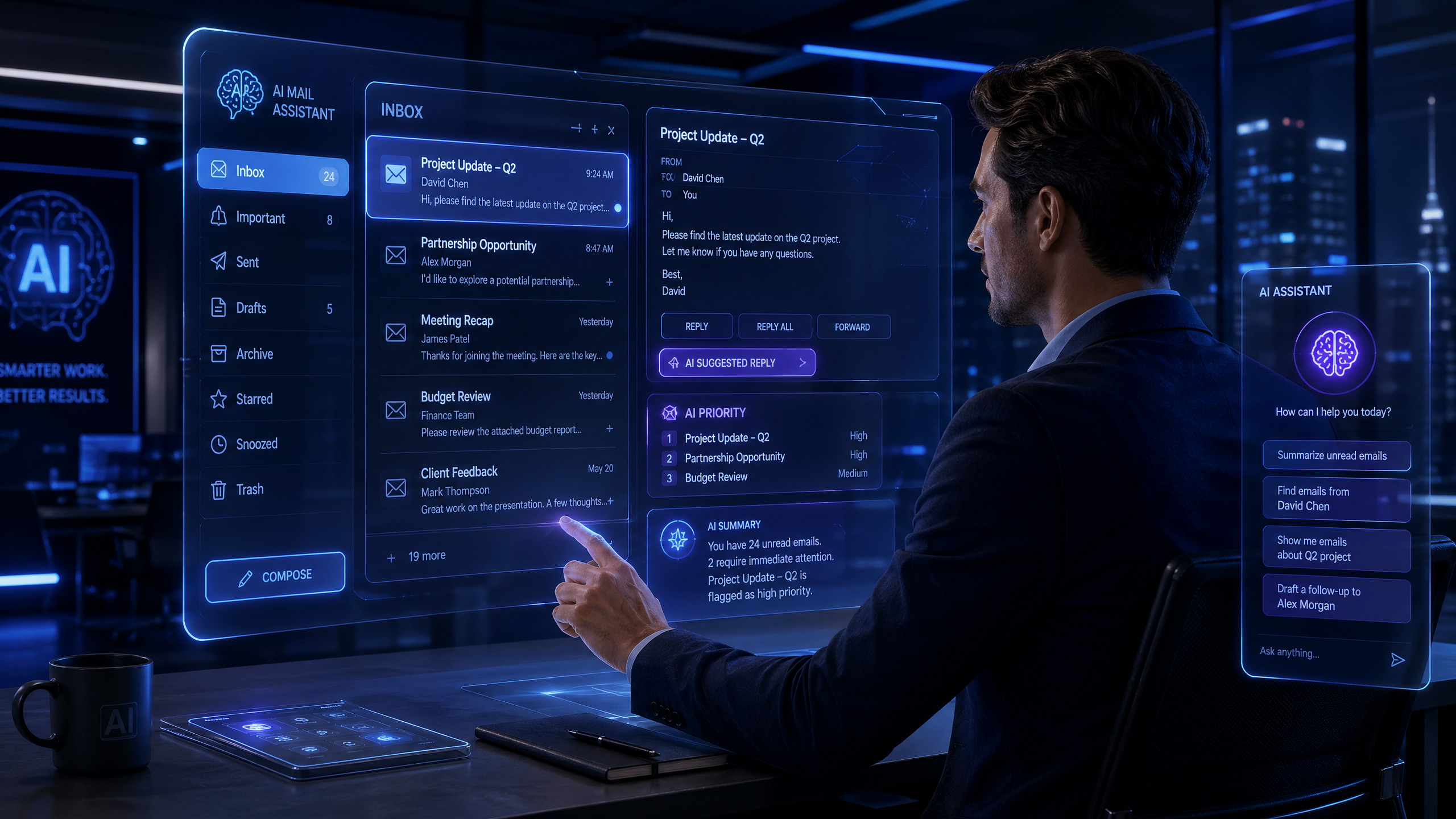
AI and Email: How Will Our Communication Change by 2027?
Our world today is witnessing an unprecedented technological revolution thanks to the tremendous advancements in Artificial Intelligence (AI). AI is no longer just a futuristic concept; it has become an integral part of our daily lives and is expected to bring about radical transformations in many sectors, including how we communicate via email. By 2027, we are likely to see smarter, more efficient, and more secure email, which will change our perception of digital communication.
Current Developments of AI in Email
Before diving into the future of email, let's look at how AI is integrated into current email services:
- Spam Filtering: This is one of the oldest and most successful applications of AI in email. Machine learning algorithms are used to identify and block unwanted messages before they reach the inbox.
- Smart Replies: Services like Gmail offer suggestions for short responses based on the message content, saving time and speeding up communication.
- Email Categorization: AI automatically categorizes messages into labels such as "Primary," "Social," and "Promotions," helping users manage their inboxes better.
- Phishing Detection: AI is used to analyze message patterns and identify fraudulent attempts, providing an additional layer of security.
The Future of Email in 2027 with AI
By 2027, AI capabilities in email are expected to go beyond simple filtering and replies, to include more complex and interactive aspects:
1. Personal AI Email Assistants
The concept of smart replies will evolve into integrated personal assistants. These assistants will be able to:
- Draft complete messages: Based on conversation context and brief instructions from the user.
- Schedule appointments: Analyze emails related to meetings and suggest suitable times based on personal calendars.
- Summarize long messages: Extract key points from long email threads to save time.
- Prioritize messages: Understand the importance of messages and prioritize them based on content and sender, not just keywords.
2. Radically Enhanced Security and Privacy
AI will play a pivotal role in enhancing email security:
- Advanced Threat Detection: AI will be able to identify sophisticated phishing attacks, new malware, and social engineering attacks that are difficult for humans to detect.
- Identity Verification: Using AI to verify sender identity more accurately, reducing the risk of impersonation.
- Data Protection: Analyzing message content to identify sensitive data and suggest automatic encryption or blocking it from accidental sending.
- Smart Temporary Email: Temporary email services may integrate with AI to create custom temporary email addresses for each use, with the ability to intelligently analyze and filter incoming messages before they reach the user.
3. Predictive Inbox Management
AI will learn user habits and preferences to proactively manage the inbox:
- Automatic Archiving: Archiving messages that do not require an immediate response.
- Smart Unsubscribe: Identifying unwanted promotional messages and suggesting automatic unsubscribing.
- Message Grouping: Grouping related messages from different senders into a single conversation for easier follow-up.
4. Integration with Other Applications
AI-powered email will seamlessly integrate with other productivity applications:
- Calendar and Task Management: Converting emails into tasks in to-do lists or adding them directly to the calendar.
- Customer Relationship Management (CRM) Systems: Automatically updating customer records based on email content.
- Collaboration Platforms: Sharing information from emails with work teams in an organized manner.
Challenges and Ethical Considerations
With all these developments, some challenges and ethical considerations arise:
- Privacy: AI's collection and analysis of email data raise privacy concerns. Strict controls and full transparency on how this data is used must be in place.
- Bias: AI algorithms may reflect biases present in the data they were trained on, which could lead to incorrect message classification or unintentional discrimination.
- Over-reliance: Over-reliance on AI may reduce users' skills in email management or decision-making.
Conclusion
By 2027, email will transform from a mere tool for sending and receiving messages into a smart and integrated personal assistant. AI will make communication more efficient, secure, and effective, saving users valuable time and protecting them from increasing threats. However, this development must be approached cautiously, prioritizing privacy and ethics to ensure a safe and beneficial digital future for everyone.